


PORT CRANE
- Loading And Unloading Crane
- Boat Crane
- Portal Crane
HOT PRODUCTS
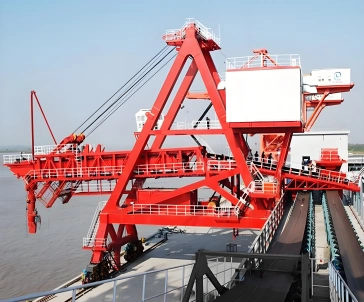
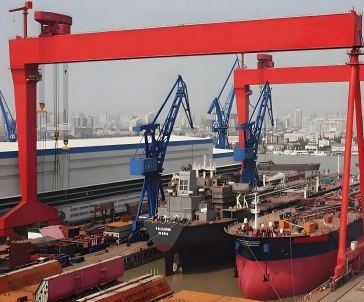
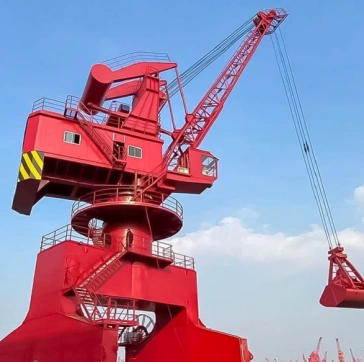
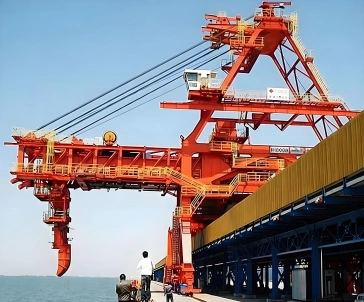
Four-link Portal Crane
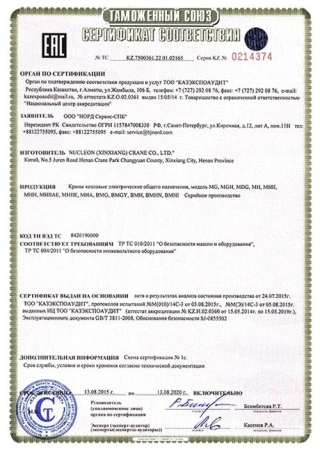
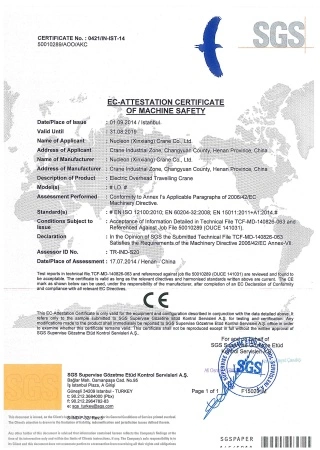
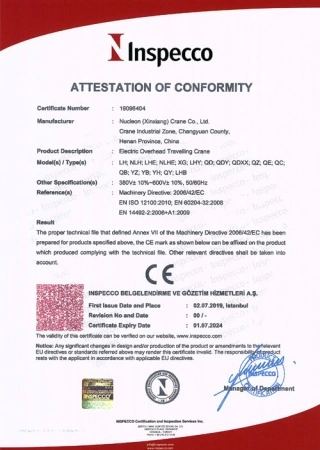
Authentication mark:


This crane is mainly used in commercial ports, fishing harbors, and offshore supply bases.
Capacity:
5 tons – 100 tons customizable
Lifting Height:
15 m – 40 m (customizable based on vessel/port requirements)
Span:
Not Applicable
Voltage/Hertz:
380V / 50Hz / 3-phase
Working Class:
A5 – A8 (ISO / FEM)
Get A Free Quote

Introduction
Application Scenario
Advantages
Structural Diagram And Parameter Table
INTRODUCTION
What is this?
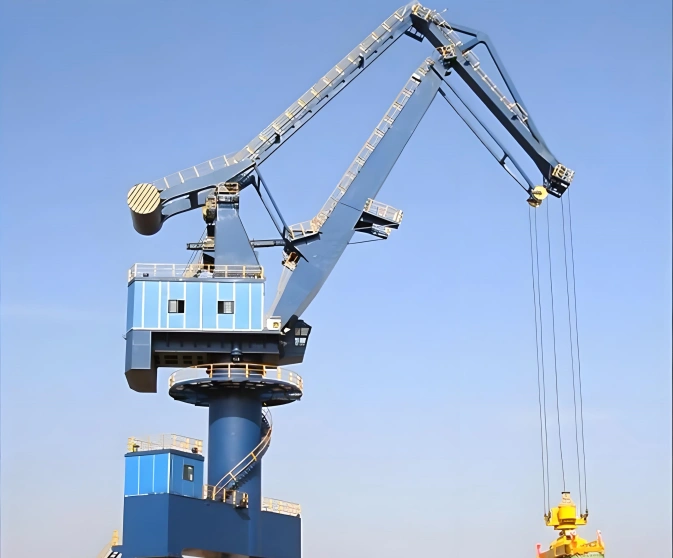
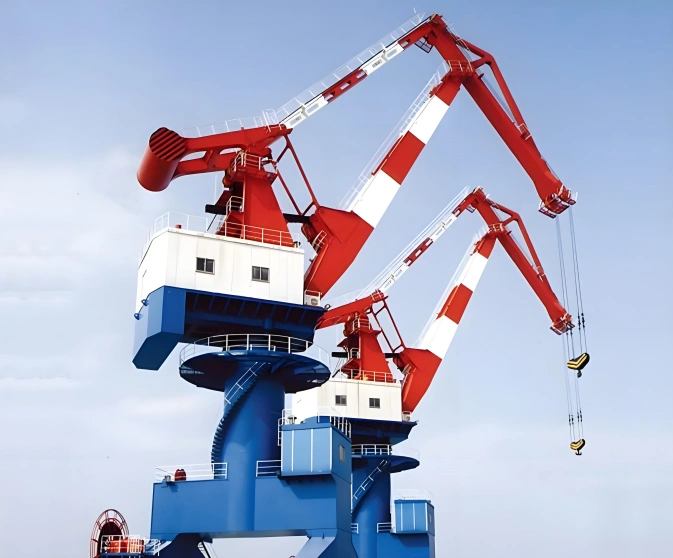
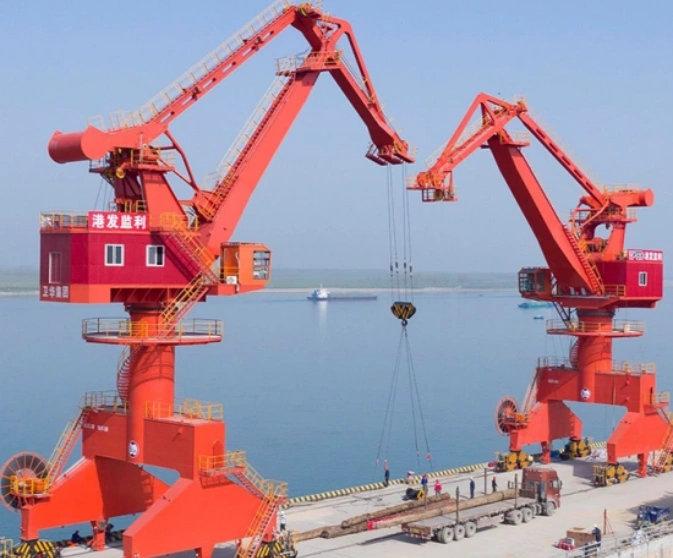
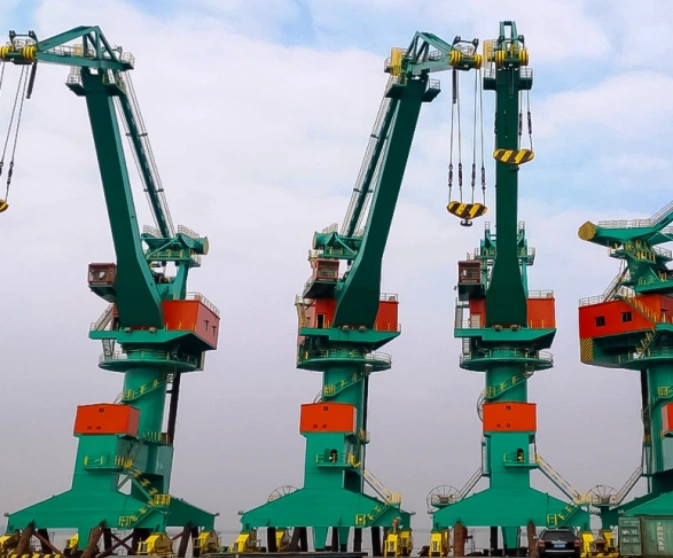
The four-link portal crane is a combination-jib portal crane widely used in port terminals, bulk cargo loading points, and shipyards. It adopts a four-link luffing mechanism consisting of a topping platform, main jib, tie rods, and slewing platform. Through the lifting and lowering of the hook or grab, the horizontal luffing of the jib, and the 360-degree full slewing of the crane, combined with traveling along rails, it achieves efficient loading and unloading of bulk cargo, general cargo, and containers. If you are operating a bulk cargo terminal, general cargo terminal, or shipyard, and need a portal slewing crane with minimal load horizontal displacement during luffing, high lifting height, and high operating efficiency, then this product is designed for you.
Why choose a four-link portal crane over a single jib portal crane?
Compared to single jib portal cranes, the four-link portal crane offers five core advantages:
First, minimal load horizontal displacement during luffing – the four-link mechanism ensures that the load moves almost horizontally during luffing, eliminating the need for coordinated hoist operation, simplifying control, and improving operating efficiency.
Second, greater lifting height – the combination-jib design achieves a higher lifting height above rail, reaching up to 40 meters or more, making it especially suitable for loading and unloading deep-hold vessels.
Thid, smaller working dead zone – the jib can be luffed down to a lower angle, providing wider coverage near the dock surface and reducing unloading blind spots.
Fourth, better luffing power efficiency – the four-link mechanism offers excellent balance, requiring lower luffing driving torque and consuming less energy than single jib designs of equivalent capacity.
Fifth, smoother operation – superior kinematic characteristics result in minimal load swing, precise landing, and lower requirements for operator skill level.
Enhance your port bulk cargo and general cargo handling capacity with more professional four-link portal cranes.
What can we do for you?
We understand that every terminal has different cargo types, different vessel types, and different operational requirements. Therefore, we offer flexible customization options: lifting capacity from 5 tons to 100 tons; working radius from 15 meters to 40 meters; lifting height from 15 meters above rail to 15 meters below rail; slewing angle of 360 degrees full slewing; attachment options including hook, grab, container spreader, or timber grab; adjustable luffing speed to meet different operational rhythms; control options of cabin operation or remote radio control. Whether you operate a small to medium-sized bulk cargo terminal, a general cargo terminal, or a shipyard, we can match the most suitable lifting capacity and working radius for you.
Unsure? Don't know?
Not sure what working radius is needed to cover your largest vessel type? Not sure what lifting height is needed to reach into deep-hold vessels? No problem. Just tell us: the maximum vessel hold depth and deadweight tonnage of your largest vessel, your dock front water depth, your berth length, and your target operational efficiency (tons per hour or containers per hour). Our engineers will provide you with an accurate quote and CAD drawings within 24 hours. Click the button below or contact us via WhatsApp/email to get your customized solution.
💡 Tip: We offer free selection consulting. Even if you are unsure about specific parameters, feel free to describe your dock conditions and cargo types, and we will calculate for you.
The four-link portal crane is a combination-jib portal crane widely used in port terminals, bulk cargo loading points, and shipyards. It adopts a four-link luffing mechanism consisting of a topping platform, main jib, tie rods, and slewing platform. Through the lifting and lowering of the hook or grab, the horizontal luffing of the jib, and the 360-degree full slewing of the crane, combined with traveling along rails, it achieves efficient loading and unloading of bulk cargo, general cargo, and containers. If you are operating a bulk cargo terminal, general cargo terminal, or shipyard, and need a portal slewing crane with minimal load horizontal displacement during luffing, high lifting height, and high operating efficiency, then this product is designed for you.
Why choose a four-link portal crane over a single jib portal crane?
Compared to single jib portal cranes, the four-link portal crane offers five core advantages:
First, minimal load horizontal displacement during luffing – the four-link mechanism ensures that the load moves almost horizontally during luffing, eliminating the need for coordinated hoist operation, simplifying control, and improving operating efficiency.
Second, greater lifting height – the combination-jib design achieves a higher lifting height above rail, reaching up to 40 meters or more, making it especially suitable for loading and unloading deep-hold vessels.
Thid, smaller working dead zone – the jib can be luffed down to a lower angle, providing wider coverage near the dock surface and reducing unloading blind spots.
Fourth, better luffing power efficiency – the four-link mechanism offers excellent balance, requiring lower luffing driving torque and consuming less energy than single jib designs of equivalent capacity.
Fifth, smoother operation – superior kinematic characteristics result in minimal load swing, precise landing, and lower requirements for operator skill level.
Enhance your port bulk cargo and general cargo handling capacity with more professional four-link portal cranes.
What can we do for you?
We understand that every terminal has different cargo types, different vessel types, and different operational requirements. Therefore, we offer flexible customization options: lifting capacity from 5 tons to 100 tons; working radius from 15 meters to 40 meters; lifting height from 15 meters above rail to 15 meters below rail; slewing angle of 360 degrees full slewing; attachment options including hook, grab, container spreader, or timber grab; adjustable luffing speed to meet different operational rhythms; control options of cabin operation or remote radio control. Whether you operate a small to medium-sized bulk cargo terminal, a general cargo terminal, or a shipyard, we can match the most suitable lifting capacity and working radius for you.
Unsure? Don't know?
Not sure what working radius is needed to cover your largest vessel type? Not sure what lifting height is needed to reach into deep-hold vessels? No problem. Just tell us: the maximum vessel hold depth and deadweight tonnage of your largest vessel, your dock front water depth, your berth length, and your target operational efficiency (tons per hour or containers per hour). Our engineers will provide you with an accurate quote and CAD drawings within 24 hours. Click the button below or contact us via WhatsApp/email to get your customized solution.
💡 Tip: We offer free selection consulting. Even if you are unsure about specific parameters, feel free to describe your dock conditions and cargo types, and we will calculate for you.
APPLICATION SCENARIO
[1] Ship-to-Shore Cargo Handling – Lifting containers, pallets, and break‑bulk cargo from vessel holds to quayside.
[2] Barge Loading/Unloading – Transferring aggregates, timber, or steel coils between barges and stockpiles.
[3] Fishing Ports – Hoisting nets, fish boxes, and equipment from trawlers.
[4] Container Yards – Stacking empty containers or handling heavy lifts on dock aprons.
[5] Offshore Supply Bases – Servicing vessels with heavy machinery spares and provisions.
[2] Barge Loading/Unloading – Transferring aggregates, timber, or steel coils between barges and stockpiles.
[3] Fishing Ports – Hoisting nets, fish boxes, and equipment from trawlers.
[4] Container Yards – Stacking empty containers or handling heavy lifts on dock aprons.
[5] Offshore Supply Bases – Servicing vessels with heavy machinery spares and provisions.
ADVANTAGES
[1] Corrosion Resistance – Marine‑grade paint, stainless steel hardware, and sealed electrics for saltwater environment.
[2] Smooth Slewing & Luffing – Hydraulic or variable‑frequency drive for precise load positioning.
[3] Compact Deck Footprint – Pedestal mount saves valuable dockside space.
[4] Heavy‑Duty Duty Cycle – Built for continuous port operations with high reliability.
[5] Easy Maintenance – Local service access and modular components reduce downtime.
[2] Smooth Slewing & Luffing – Hydraulic or variable‑frequency drive for precise load positioning.
[3] Compact Deck Footprint – Pedestal mount saves valuable dockside space.
[4] Heavy‑Duty Duty Cycle – Built for continuous port operations with high reliability.
[5] Easy Maintenance – Local service access and modular components reduce downtime.
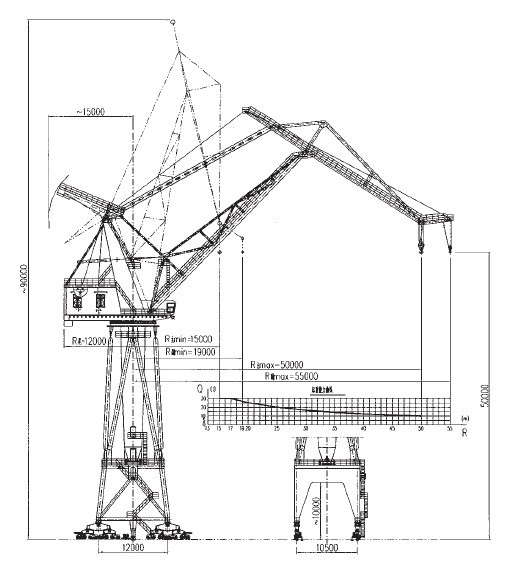
STRUCTURAL DIAGRAM AND PARAMETER TABLE
| Parameter | Specification |
|---|---|
| Working Class | A5 – A8 (ISO / FEM) |
| Capacity | 5 tons – 100 tons |
| Lifting height - Above rail | 15 m – 40 m |
| Lifting height - Below rail | 0 m – 15 m |
| Working radius | 15 m – 40 m |
| Hoisting speed | 10 m – 60 m/min |
| Lifting Speed | Fully loaded: 5 – 20 m/min Empty: 10 – 40 m/min |
| Slewing speed | 0.5 – 1.5 rpm |
| Wheel base | 6 m – 10 m |
| Slewing Angle | 360° continuous (full rotation) |
| Control Method | Remote radio control / Cabin control / Pendant control |
| Power Supply | 380V / 50Hz / 3-phase |
| Temperature | -20°C to +50°C |
| Protection Grade | Motors: IP55 – IP56 Electrical cabinet: IP54 – IP65 |
| Structure Type | Deck-mounted slewing jib crane – Single or double boom with hydraulic or wire rope luffing |






 Free Technical Consultation



