


PORT CRANE
- Loading And Unloading Crane
- Boat Crane
- Portal Crane
HOT PRODUCTS
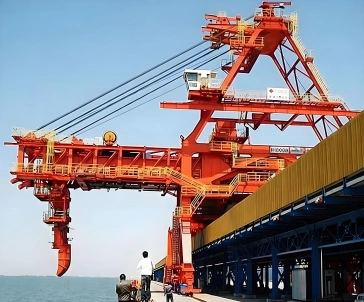
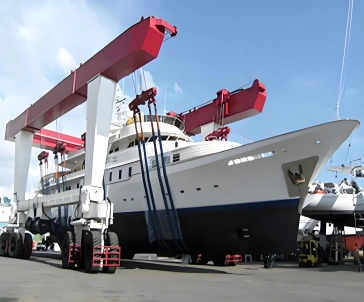
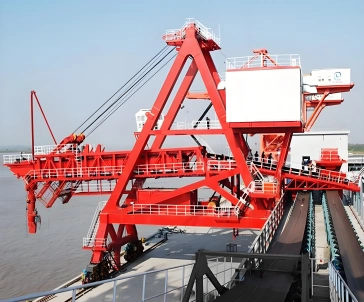
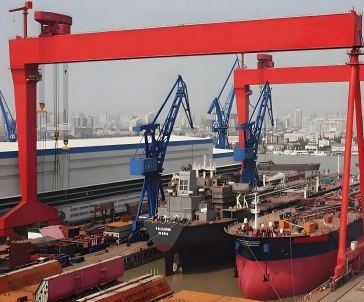
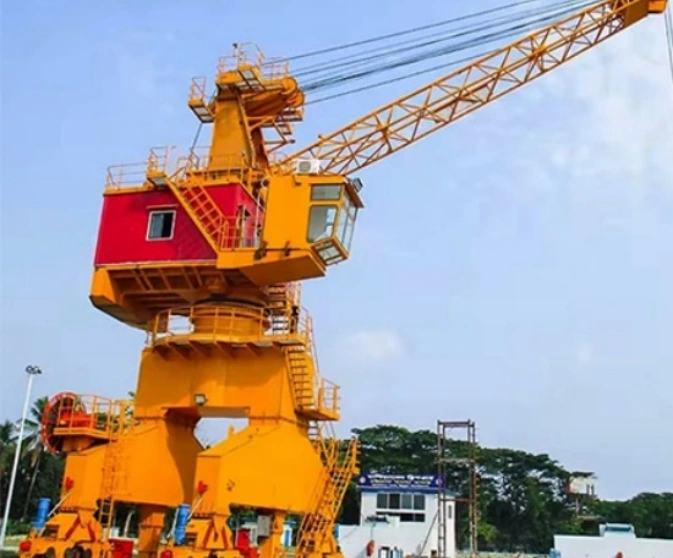
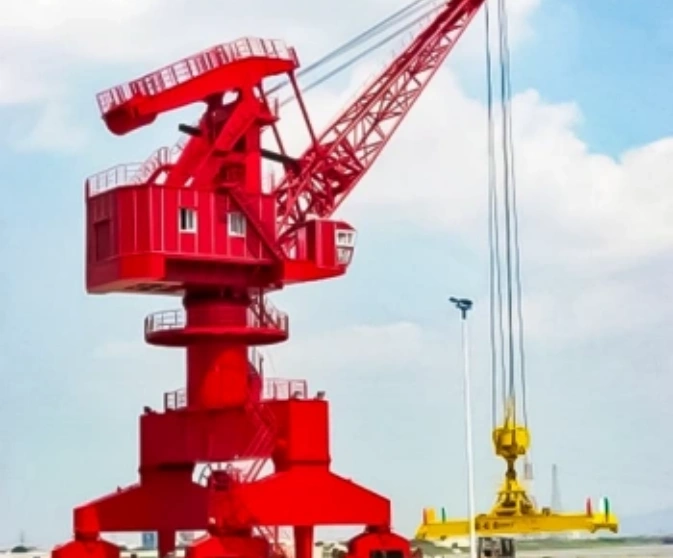
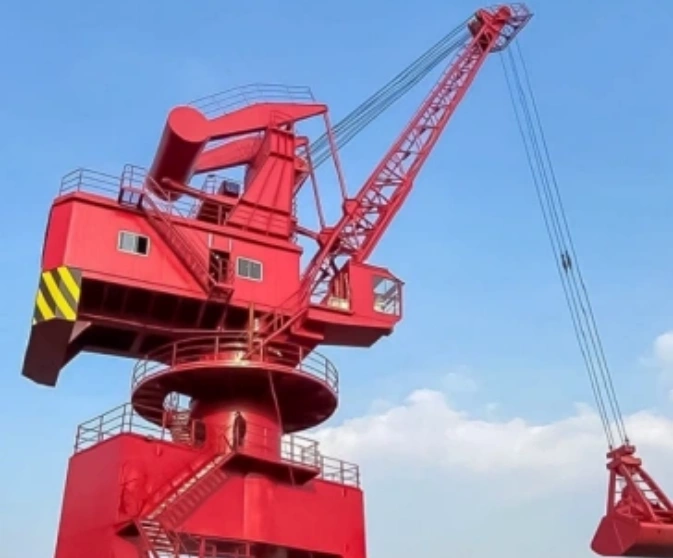
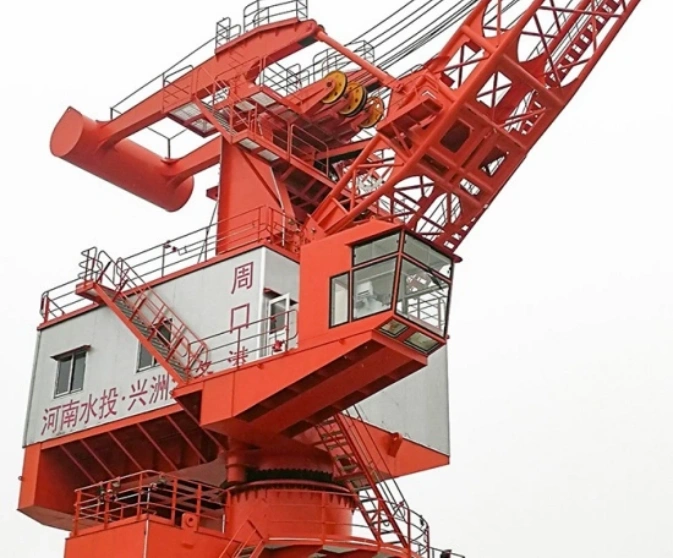
Single Jib Portal Crane
Authentication mark:


This crane is mainly used in offshore oil and gas platforms, container ports, and shipbuilding yards.
Capacity:
30 t – 100 t (single lift) 50 t – 120 t (tandem lift, twin 20ft containers)
Lifting Height:
Rail 40m+Under Rail 36m
Span:
16 m – 35 m (distance between quay rails)
Voltage/Hertz:
10kV / 50Hz / 3-phase
Working Class:
A7, A8
Get A Free Quote

Introduction
Application Scenario
Advantages
Structural Diagram And Parameter Table
INTRODUCTION
What is this?
The single jib portal crane is a portal-type slewing crane widely used in port terminals, stockyards, shipyards, and cargo transfer stations. It adopts a single jib structure, and through the lifting and lowering of the hook or grab, the luffing motion of the jib, the traveling of the crane along rails, and the 360-degree full slewing function, it achieves efficient loading and unloading of bulk cargo, general cargo, containers, and heavy-lift items. If you are operating a bulk cargo terminal, general cargo terminal, shipyard, or railway freight yard, and need a portal slewing crane with simple structure, strong load capacity, and flexible operation, then this product is designed for you.
Why choose a single jib portal crane over a twin jib portal crane?
Compared to twin jib portal cranes, the single jib portal crane offers five core advantages:
First, simpler structure – with fewer components, manufacturing and maintenance costs are lower, and the failure rate is significantly reduced compared to twin jib designs.
Second, stronger load capacity – the high rigidity of the single jib makes it ideal for heavy-duty operations, with lifting capacity from 50 tons to 300 tons, especially suitable for heavy-lift handling and shipyard lifting.
Third, lower luffing power consumption – the luffing mechanism requires less power, reducing energy consumption by approximately 15%-20% compared to twin jib designs, making long-term operation more economical.
Fourth, better operator visibility – without complex tie rods and a topping platform, the operator enjoys an unobstructed view, enhancing operational safety.
Fifth, easier maintenance – the simple design means fewer lubrication points, making daily inspections and repairs faster and more convenient.
Enhance your bulk cargo and heavy-lift handling capacity with more professional single jib portal cranes.
What can we do for you?
We understand that every terminal has different cargo types, different operational intensities, and different site conditions. Therefore, we offer flexible customization options: lifting capacity from 30 tons to 300 tons; working radius from 18 meters to 45 meters; lifting height from 10 meters above rail to 20 meters below rail; slewing angle of 360 degrees full slewing; attachment options including hook, grab, container spreader, or lifting magnet; control options of cabin operation or remote radio control. Whether you operate a bulk cargo terminal, general cargo terminal, shipyard, or railway freight yard, we can match the most suitable lifting capacity and working radius for you.
Unsure? Don't know?
Not sure what working radius is needed to cover your operation area? Not sure what lifting height is needed to meet your ship unloading or truck loading requirements? No problem. Just tell us: your dock front or stockyard dimensions, the maximum cargo weight and type you need to handle, your dock water depth or railway line position, and your target operational efficiency. Our engineers will provide you with an accurate quote and CAD drawings within 24 hours. Click the button below or contact us via WhatsApp/email to get your customized solution.
💡 Tip: We offer free selection consulting. Even if you are unsure about specific parameters, feel free to describe your operation scenario and cargo type, and we will calculate for you.
The single jib portal crane is a portal-type slewing crane widely used in port terminals, stockyards, shipyards, and cargo transfer stations. It adopts a single jib structure, and through the lifting and lowering of the hook or grab, the luffing motion of the jib, the traveling of the crane along rails, and the 360-degree full slewing function, it achieves efficient loading and unloading of bulk cargo, general cargo, containers, and heavy-lift items. If you are operating a bulk cargo terminal, general cargo terminal, shipyard, or railway freight yard, and need a portal slewing crane with simple structure, strong load capacity, and flexible operation, then this product is designed for you.
Why choose a single jib portal crane over a twin jib portal crane?
Compared to twin jib portal cranes, the single jib portal crane offers five core advantages:
First, simpler structure – with fewer components, manufacturing and maintenance costs are lower, and the failure rate is significantly reduced compared to twin jib designs.
Second, stronger load capacity – the high rigidity of the single jib makes it ideal for heavy-duty operations, with lifting capacity from 50 tons to 300 tons, especially suitable for heavy-lift handling and shipyard lifting.
Third, lower luffing power consumption – the luffing mechanism requires less power, reducing energy consumption by approximately 15%-20% compared to twin jib designs, making long-term operation more economical.
Fourth, better operator visibility – without complex tie rods and a topping platform, the operator enjoys an unobstructed view, enhancing operational safety.
Fifth, easier maintenance – the simple design means fewer lubrication points, making daily inspections and repairs faster and more convenient.
Enhance your bulk cargo and heavy-lift handling capacity with more professional single jib portal cranes.
What can we do for you?
We understand that every terminal has different cargo types, different operational intensities, and different site conditions. Therefore, we offer flexible customization options: lifting capacity from 30 tons to 300 tons; working radius from 18 meters to 45 meters; lifting height from 10 meters above rail to 20 meters below rail; slewing angle of 360 degrees full slewing; attachment options including hook, grab, container spreader, or lifting magnet; control options of cabin operation or remote radio control. Whether you operate a bulk cargo terminal, general cargo terminal, shipyard, or railway freight yard, we can match the most suitable lifting capacity and working radius for you.
Unsure? Don't know?
Not sure what working radius is needed to cover your operation area? Not sure what lifting height is needed to meet your ship unloading or truck loading requirements? No problem. Just tell us: your dock front or stockyard dimensions, the maximum cargo weight and type you need to handle, your dock water depth or railway line position, and your target operational efficiency. Our engineers will provide you with an accurate quote and CAD drawings within 24 hours. Click the button below or contact us via WhatsApp/email to get your customized solution.
💡 Tip: We offer free selection consulting. Even if you are unsure about specific parameters, feel free to describe your operation scenario and cargo type, and we will calculate for you.
APPLICATION SCENARIO
[1] Offshore Platforms – Lifting drilling equipment, pipes, and supplies to/from supply vessels.
[2] Container Quays – Loading/unloading containers from ships to shore with high‑speed operation.
[3] Bulk Cargo Terminals – Handling coal, ore, grain, and cement using grabs or hooks.
[4] Shipyards – Assembling ship sections, moving heavy blocks, and launching vessels.
[5] Offshore Wind Farms – Installing turbine components and servicing foundations.
[2] Container Quays – Loading/unloading containers from ships to shore with high‑speed operation.
[3] Bulk Cargo Terminals – Handling coal, ore, grain, and cement using grabs or hooks.
[4] Shipyards – Assembling ship sections, moving heavy blocks, and launching vessels.
[5] Offshore Wind Farms – Installing turbine components and servicing foundations.
ADVANTAGES
[1] Marine Environment Certified – Corrosion‑resistant coatings, stainless steel fasteners, and sealed electrical enclosures.
[2] High Lifting Capacity – Up to 200t for heavy offshore and quayside lifts.
[3] Full Slewing Capability – 360° rotation for flexible load positioning.
[4] Smooth Luffing and Hoisting – Hydraulic or frequency‑controlled drives for precise control in rough seas.
[5] Low Maintenance – Modular design and offshore‑proven components reduce downtime.
[2] High Lifting Capacity – Up to 200t for heavy offshore and quayside lifts.
[3] Full Slewing Capability – 360° rotation for flexible load positioning.
[4] Smooth Luffing and Hoisting – Hydraulic or frequency‑controlled drives for precise control in rough seas.
[5] Low Maintenance – Modular design and offshore‑proven components reduce downtime.
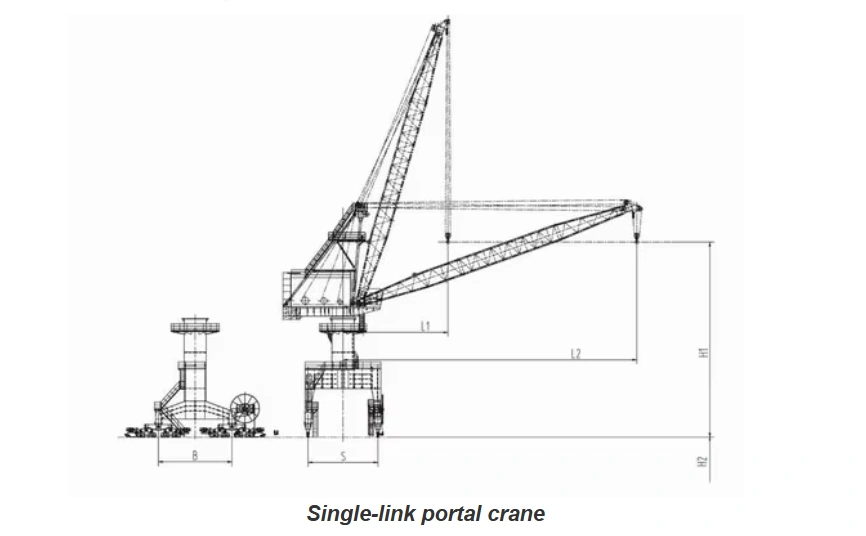
STRUCTURAL DIAGRAM AND PARAMETER TABLE
| Parameter | Specification |
|---|---|
| Working Class | A7, A8 |
| Lifting Capacity | 30 t – 100 t (single lift) 50 t – 120 t (tandem lift, twin 20ft containers) |
| Outreach (Waterside) | 35 m – 70 m (from quay rail to ship centerline, for vessel sizes up to 24,000 TEU) |
| Back Reach (Landside) | 15 m – 25 m (from quay rail to truck lane) |
| Rail Gauge | 16 m – 35 m (distance between quay rails) |
| Lifting Height (Above Rail) | 30 m – 60 m (stacking height: 8 – 20 containers high above rail) |
| Lifting Depth | 15 m – 25 m |
| Lifting Speed | Fully loaded: 35 – 90 m/min Empty: 70 – 180 m/min |
| Trolley Travelling Speed | 120 – 240 m/min (high-speed for efficient ship-to-shore operation) |
| Crane Travelling Speed | 20 – 45 m/min (along quay rail for repositioning) |
| Boom Hoisting/Lowering Time | 2 – 7 minutes (one-way, for ship clearance or storm condition) |
| Control Method | Cabin control (ergonomic design, dual-joystick) / Remote radio control (optional) / Fully automatic (optional) |
| Power Supply | 10kV / 50Hz / 3-phase |
| Temperature | -25°C to +45°C (marine environment) |









 Free Technical Consultation



